
When is the Best Time to Use a Body Fat Scale?
2025-07-15
Table of Contents
- Introduction
- Why Timing Matters for Bathroom Scale Readings
- The Best Time to Use a Bathroom Scales
-
- Morning: Post-Wake-Up, Pre-Breakfast
-
- Consistency: Same Time, Same Conditions
- Consistency: Same Time, Same Conditions
-
- Avoiding "High-Variability" Windows
- Common Digital Bathroom Scale Parameters
- How to Achieve Precise Measurements with a Digital Bathroom Scale
-
- Pre-Measurement Preparation
-
- Proper Usage Techniques
-
- Post-Measurement Tracking
- Expert Opinions on Timing and Digital Scales Bathroom Accuracy
- Frequently Asked Questions (FAQ)
- Related: Our Previous Guide to Good Digital Bathroom Scales
- Conclusion
Introduction
For health enthusiasts, fitness buffs, and anyone monitoring their wellness journey, a top rated digital bathroom scales is more than just a tool—it’s a window into their body’s composition. Unlike traditional scales that only measure weight, a good digital bathroom scale uses bioelectrical impedance analysis (BIA) to estimate body fat percentage, muscle mass, water weight, and more. But here’s the catch: its accuracy hinges heavily on when you use it.
Fluctuations in hydration, food intake, and physical activity can skew results, making timing a critical factor in getting reliable data. In this guide, we’ll break down the science behind optimal measurement windows, share expert-backed advice, and provide actionable tips to ensure your bathroom digital scale readings are as precise as possible. We’ll also reference our earlier deep dive into best rated digital bathroom scales.
Why Timing Matters for Best Bathroom Weight Scale Readings
To understand why timing is crucial, let’s first unpack how a best bathroom scales works. BIA sends a low-level electrical current through the body; fat, muscle, and water conduct electricity differently, and the scale uses this data to calculate body composition.
However, variables like hydration levels, food volume, and post-exercise inflammation can alter the body’s electrical conductivity—throwing off readings. For example:
- Drinking water increases total body water, which lowers impedance (the current flows more easily), potentially leading the scale to underestimate body fat.
- Eating a meal adds mass to the digestive system, which the scale may misinterpret as changes in fat or muscle.
- Exercise causes temporary fluid shifts (e.g., sweating, increased blood flow to muscles), disrupting BIA accuracy for hours.
These fluctuations mean that measuring at random times can create misleading trends. A 2021 study in the Journal of Sports Science & Medicine found that body fat percentage readings from bathroom weight scale target can vary by up to 3–5% depending on timing alone—enough to mislead users about their progress.
The Best Time to Use a Best Rated Bathroom Weight Scales
Morning: Post-Wake-Up, Pre-Breakfast
By far, the most recommended window to use a bathroom weight scale is within 30 minutes of waking up, before eating or drinking anything. Here’s why:
- Stable Hydration: After 6–8 hours of sleep, your body’s water levels are relatively consistent. You haven’t consumed fluids, and overnight hydration fluctuations (like sweating during sleep) are minimal. This stability ensures the BIA current travels through tissues predictably.
- Empty Digestive Tract: No food means no added mass in the stomach or intestines, which can interfere with impedance readings. A full stomach or recent meal introduces "extraneous mass" that the scale may misclassify.
- Low Activity Impact: Sleep is a period of minimal movement, so there’s no post-exercise fluid shift or muscle inflammation to skew results.
Dr. Lisa Chen, a sports physiologist at the University of California, explains: "Morning measurements capture your body in its ‘baseline’ state. Overnight, hormonal and metabolic processes stabilize, making this window the gold standard for consistency."
Consistency: Same Time, Same Conditions
If morning measurements aren’t feasible (e.g., early work shifts), the second-best rule is consistency. Choose a time that fits your schedule, and stick to it—every day, or at least on the same days each week (e.g., every Monday and Friday at 7 PM).
Why does consistency trump "perfect timing"? Because your body follows daily patterns:
- Hydration rises and falls with meals, exercise, and even stress.
- Muscle glycogen (stored carbs) fluctuates, affecting water retention.
- Hormones like cortisol (stress hormone) and insulin (regulates blood sugar) vary throughout the day, influencing fluid balance.
By measuring at the same time, you eliminate these variables as much as possible. For example, if you always measure at 8 PM, post-dinner but pre-bed, your readings will reflect the same "state" week after week—making trends (e.g., a 1% drop in body fat over a month) far more reliable.
Avoiding "High-Variability" Windows
Certain times of day are prone to extreme fluctuations, making them poor choices for most accurate bathroom scale use. Steer clear of these windows:
- 1–3 Hours After Eating: Digestion increases blood flow to the gut, and food mass adds temporary weight. A heavy meal can also spike insulin, causing your body to retain water—throwing off BIA readings.
- 30 Minutes–2 Hours After Exercise: Sweating depletes hydration, while post-workout inflammation (normal muscle repair) alters fluid distribution. Even light exercise like a walk can increase blood flow to muscles, skewing impedance.
- 1 Hour After Drinking Large Quantities of Fluid: Chugging water, coffee, or soda dilutes your body’s electrolyte balance, making it harder for the accurate bathroom scale to distinguish between fat and water.
- Right Before Bed: Late-night snacks, evening hydration, or even sitting for hours (which slows circulation) can create inconsistent readings.
Common Best Body Fat Scale Parameters
Not all body composition and scale are created equal. Here’s a breakdown of key parameters to consider when choosing one, along with typical ranges for popular models:
|
Brand
|
Weight Capacity
|
Body Fat Measurement Range
|
Accuracy (Body Fat)
|
Additional Features
|
Power Source
|
Price Range
|
|
Withings Body+
|
396 lbs (180 kg)
|
5–75%
|
±0.1%
|
Bluetooth sync, multi-user mode, pregnancy mode
|
Rechargeable battery
|
\(80–\)100
|
|
Fitbit Aria Air
|
400 lbs (180 kg)
|
10–60%
|
±1%
|
Wi-Fi sync, BMI calculation
|
4x AAA batteries
|
\(50–\)70
|
|
Garmin Index S2
|
400 lbs (180 kg)
|
5–50% (adults); 5–30% (kids)
|
±0.5%
|
ANT+ connectivity, muscle mass tracking
|
Rechargeable battery
|
\(130–\)150
|
|
Etekcity Digital
|
400 lbs (180 kg)
|
5–50%
|
±1%
|
Step-on technology, 8-user memory
|
2x AAA batteries
|
\(30–\)50
|
|
Tanita BC-583
|
330 lbs (150 kg)
|
5–45%
|
±0.2%
|
Segmental body fat analysis, visceral fat rating
|
AC adapter
|
\(150–\)200
|
Table 1: Key parameters of popular body fat scales (2024 data). Accuracy claims are per manufacturer specifications.

How to Achieve Precise Measurements with a Body Scale
Even if you measure at the best time, improper use can undermine your most accurate body fat scale’s accuracy. Follow these steps to ensure reliable results:
Pre-Measurement Preparation
- Empty Your Bladder: A full bladder adds extra weight and can disrupt the BIA current’s path through the lower body. Urinate 10–15 minutes before measuring.
- Avoid Moisture: Dry your feet thoroughly. Water (e.g., from a shower, sweat) conducts electricity, which can cause the scale to overestimate muscle mass (since muscle holds more water than fat).
- Skip Lotions or Oils: Thick creams or oils on your feet create a barrier, weakening the BIA signal. Wash your feet if needed, then dry them.
- Fast (If Measuring in the Morning): Wait 2–3 hours after eating or drinking if you’re not measuring first thing. For morning use, measure before coffee, tea, or breakfast.
Proper Usage Techniques
- Place the Scale on a Hard, Flat Surface: Carpets, rugs, or uneven floors can cause the scale to tilt, altering weight distribution. Opt for tile, hardwood, or linoleum.
- Stand Still, Feet Positioned Correctly: Most best scale for body fat have metal electrodes on the platform—step on so your bare feet fully contact these sensors. Stand straight, arms at your sides, and avoid shifting for 5–10 seconds while the scale processes.
- Calibrate Regularly: Check your scale’s manual for calibration instructions. Most models auto-calibrate, but some require periodic adjustment (e.g., using a known weight like a dumbbell).
Post-Measurement Tracking
- Record Results Immediately: Jot down body fat percentage, weight, and other metrics (e.g., muscle mass) in a app (e.g., Withings Health Mate, Fitbit) or journal.
- Average Weekly Readings: Daily fluctuations are normal—calculate a weekly average to spot trends. For example, if Monday’s reading is 22.5% and Friday’s is 22.1%, your weekly average is 22.3%.
- Compare Over Time: Focus on changes over weeks or months, not days. A 0.5–1% drop in body fat over 4 weeks is more meaningful than daily ups and downs.

Expert Opinions on Timing and Body Fat Composition Scale Accuracy
We spoke to nutritionists, trainers, and physiologists to get their take on optimal body weight scale timing:
- Dr. Michael Rodriguez, Nutrition Scientist at Harvard Medical School: "The morning window is non-negotiable for precision. Overnight, your body enters a post-absorptive state—no food, stable hydration, minimal hormone fluctuations. This is when BIA most accurately reflects true body composition."
- Sarah Johnson, Certified Personal Trainer (NASM): "I tell clients: ‘Pick a time and stick to it like a workout schedule.’ If you measure at 7 AM Monday and 9 PM Thursday, you’re comparing apples to oranges. Consistency beats perfection—even if your ‘best time’ is 6 PM."
- Dr. Emily Park, Sports Medicine Specialist: "Avoiding post-exercise windows is critical. After a run or weightlifting, blood flow to muscles increases, and you lose water through sweat. BIA readings in these moments can underestimate body fat by 2–3%—enough to mislead someone into thinking they’ve made progress when they haven’t."
- Mark Davis, Product Developer at a Leading Body Fat Scale Brand: "Our internal testing shows that morning readings have a coefficient of variation (CV) of 0.5%—meaning they’re very consistent. Evening readings, by contrast, have a CV of 1.2–1.5% due to daily fluid shifts. That’s why we emphasize morning use in our user manuals."
Frequently Asked Questions (FAQ)
Q1: Can I use my digital body weight scale after drinking water?
A1: It’s best to wait 30–60 minutes after drinking. Even 8–16 oz of water can temporarily increase hydration, altering BIA readings. For morning use, measure before your first glass of water.
Q2: I work night shifts—does the "morning" rule still apply?
A2: Yes, but adjust for your sleep schedule. If you sleep from 8 AM to 4 PM, measure right after waking up (4 PM), before eating. Your "morning" is whenever you finish your overnight rest.
Q3: How long after exercise should I wait to use my body weight balance scale?
A3: Wait 2–3 hours post-workout. This allows hydration levels to normalize and post-exercise inflammation to subside. For example, if you workout at 6 PM, measure at 9 PM or later.
Q4: My human body weight scale readings fluctuate by 1–2% daily—is this normal?
A4: Yes. Daily variations of 1–3% are typical due to hydration, food, and activity. Focus on weekly averages instead of daily numbers.
Q5: Can I use my best body weight scale during my period?
A5: Hormonal changes during menstruation can cause water retention, which may slightly overestimate body fat. If possible, measure on the same day of your cycle each month (e.g., day 5) for consistency.
Q6: Is it okay to use my body fat weight scale on different days (e.g., Monday, Wednesday, Saturday)?
A6: Yes, as long as the time of day is consistent. Measuring Monday at 7 AM, Wednesday at 7 AM, and Saturday at 7 AM is better than measuring daily at random times.
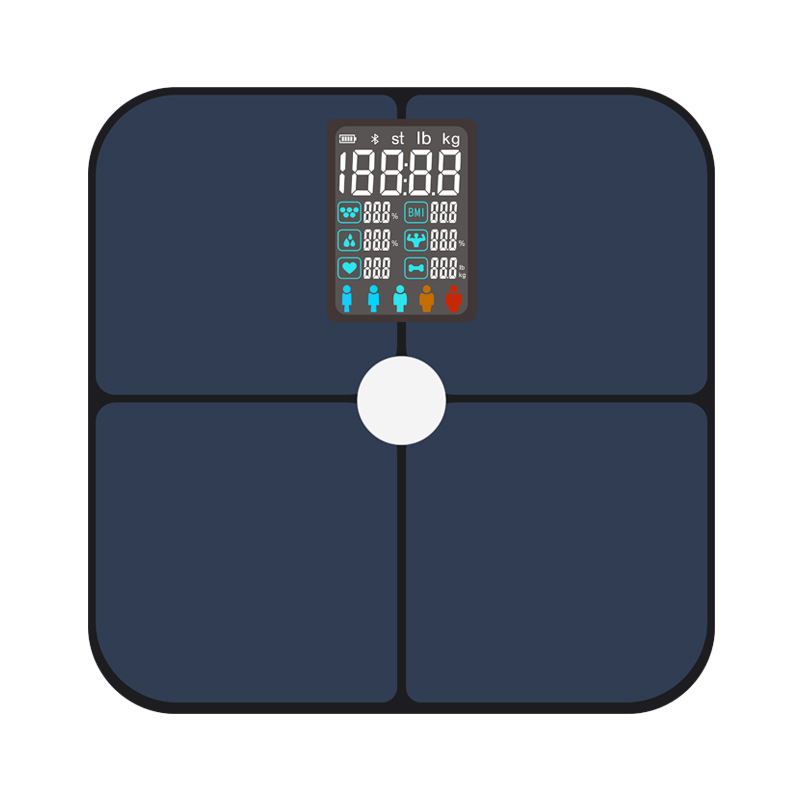
Related: Our Previous Guide to Body Composition Scale
For a deeper dive into how body fat scales work, their accuracy compared to clinical tools (e.g., DEXA scans), and how to choose the right model, check out our earlier guide:
This guide breaks down BIA technology, compares consumer-grade weighing scale body weight to professional equipment, and offers tips for maximizing long-term accuracy—including how timing interacts with other factors like scale quality and user behavior.
Conclusion
The best time to use a best body composition scale is in the morning, right after waking up and before eating or drinking. This window minimizes fluctuations from food, hydration, and activity, giving you the most accurate snapshot of your body composition. If morning use isn’t possible, prioritize consistency—measure at the same time, under the same conditions, every time.
By pairing optimal timing with proper usage techniques (e.g., drying your feet, standing still) and tracking trends over weeks, you’ll turn your best scale for body composition into a powerful tool for monitoring health and progress. Remember: it’s not about perfect daily readings, but about understanding your body’s patterns over time.
Whether you’re aiming to lose fat, build muscle, or simply stay healthy, nailing the timing of your body composition scales use is a small step that yields big insights.
How Should I Store My Postal Scale When Not in Use?
What are the Legal Requirements for Breathalyzer Tests in the US?
Related Article

In recent years, there has been a growing emphasis on overall health and fitness in the United States. While weight is a common metric for tracking progress, body fat percentage provides a more comprehensive understanding of one's body composition. A body scale that can accurately measure body fat percentage has become an essential tool for fitness enthusiasts, athletes, and individuals on a weight - loss or health - improvement journey.
What's the Best Body Scale for Measuring Body Fat Percentage?

A best body scale is a common household item used for monitoring weight, which is crucial for health management, fitness tracking, and overall well - being. However, many users may find that the readings on their body scale vary, leading to confusion about their actual weight.
What Factors Can Affect the Accuracy of a Body Scale?

Body composition scales have become popular tools for individuals aiming to monitor their overall health recently. These scales, which can estimate not only body weight but also body fat percentage, muscle mass, water content, and other vital metrics, seem like a convenient way to keep tabs on one's physical condition. However, to obtain truly accurate results, several factors need to be considered. This guide will walk you through the best practices for using a body scale effectively.
How Should I Use a Body Composition Scale to Get Accurate Results?
Bathroom scales are a common household item, used by millions to monitor their body weight. Whether for health - related reasons such as weight loss or gain management, or simply out of curiosity, the accuracy of these scales is of utmost importance. In this comprehensive article, we will delve into the factors that influence the accuracy of bathroom scales, the different types of scales available, and how to ensure you get the most accurate readings possible.
How accurate are bathroom scales?

In the pursuit of a healthier lifestyle and weight loss goals, having an accurate and reliable bathroom scale at home can be an invaluable tool. This article aims to guide you through the process, exploring the key factors to consider and highlighting some top - performing models that are particularly well - suited for those looking to shed pounds.
What is the Best Home Bathroom Scale for Weight Loss?