
What’s the Maximum Weight Capacity of a Luggage Scale?
2025-07-26

Table of Contents

- Introduction: Why Maximum Weight Capacity Matters for Luggage Scales
- Typical Weight Capacity Ranges for Luggage Scales
- Factors Influencing a Luggage Scale’s Maximum Capacity
- Common Luggage Scale Models: Capacity and Key Specs
- How to Ensure Accurate Measurements at Maximum Capacity
- Expert Insights: Choosing the Right Capacity for Your Travel Needs
- Frequently Asked Questions (FAQs) About Luggage Scale Capacity
- Related Resources: Previous Coverage on Luggage Scales
Introduction: Why Maximum Weight Capacity Matters for Luggage Scales
For travelers, few things are more frustrating than arriving at the airport only to discover your checked bag exceeds an airline’s weight limit—resulting in unexpected fees that can range from \(50 to \)200 per bag. This is where a reliable luggage scale becomes indispensable. But not all scales are created equal, and one of the most critical specifications to consider is its maximum weight capacity.
The maximum weight capacity of a luggage scale determines the heaviest bag or item it can accurately measure. Choosing a scale with insufficient capacity means it may fail to provide a reading, give inaccurate results, or even sustain damage when overloaded. Conversely, a scale with excessive capacity for your needs may be bulkier, heavier, or more expensive than necessary.
In this guide, we’ll explore the typical weight capacities of luggage scales, the factors that influence these limits, and how to select the right capacity for your travel style—whether you’re a casual weekend traveler or a frequent flyer hauling heavy gear.

Typical Weight Capacity Ranges for Luggage Scales
Luggage scales are designed to accommodate a wide range of travel needs, from lightweight carry-ons to heavy checked bags. Their maximum weight capacities generally fall into three main categories:
1. Compact/Travel-Friendly Scales: 50–110 Pounds (23–50 Kilograms)
- Ideal for: Most leisure travelers, backpackers, and those primarily carrying carry-on luggage or small checked bags.
- Common Use Cases: Measuring standard checked bags (which airlines typically cap at 50 pounds/23 kilograms for economy class), backpacks, and small suitcases.
- Examples: The Bagail Digital Luggage Scale and Travelon Stop & Lock Scale both offer a 110-pound (50-kilogram) capacity, striking a balance between portability and utility.
2. Heavy-Duty Scales: 110–220 Pounds (50–100 Kilograms)
- Ideal for: Business travelers with heavy equipment (laptops, samples), families traveling with multiple bags, or those carrying sports gear (skis, golf clubs).
- Common Use Cases: Measuring oversized luggage, duffels filled with winter clothing, or gear-heavy bags that exceed standard airline limits but are allowed with additional fees.
- Examples: The RENPHO Heavy-Duty Luggage Scale and MYCARBON Digital Scale both offer 220-pound (100-kilogram) capacities, making them suitable for bulkier items.
3. Industrial/Commercial Scales: 220+ Pounds (100+ Kilograms)
- Ideal for: Professional travelers (photographers, musicians), movers, or anyone transporting extremely heavy items (e.g., stage equipment, medical supplies).
- Common Use Cases: Measuring cargo, large trunks, or multiple bags weighed together. These scales are less portable but prioritize durability and high capacity.
- Examples: The Honeywell Industrial Postal Scale and Digiweigh DK-1000 can handle up to 330 pounds (150 kilograms) or more, though they are larger and often used in stationary settings.

Factors Influencing a Luggage Scale’s Maximum Capacity
A luggage scale’s maximum weight capacity is not arbitrary; it is determined by several key design and engineering factors:
1. Sensor Technology
- Strain Gauge Sensors: Most consumer luggage scales use strain gauges, which convert mechanical force (weight) into an electrical signal. The quality and number of strain gauges dictate how much weight the scale can handle. Higher-capacity scales often use reinforced gauges with thicker metal components to resist deformation under heavy loads.
- Load Cells: Industrial scales may use load cells, which are more robust than strain gauges and can withstand repeated heavy use. Load cells are common in scales with capacities over 220 pounds.
2. Material Durability
- Housing and Hooks: The scale’s frame, hook, or strap must be made from strong materials to avoid breaking under stress. Compact scales often use high-grade plastic with metal reinforcements, while heavy-duty models may feature aluminum or stainless steel components. For example, the EatSmart SmartGrip Scale uses a stainless steel hook rated to withstand 110 pounds without bending.
- Internal Components: Springs, wiring, and circuit boards in high-capacity scales are designed to handle higher electrical currents and mechanical stress, preventing burnout or failure.
3. Calibration Standards
- Scales are calibrated to ensure accuracy within their rated capacity. Overloading a scale can throw off its calibration permanently, even if the scale doesn’t break. Manufacturers test scales at 120–150% of their maximum capacity during quality control to ensure safety margins, but this is not a license for regular overloading.
4. Portability vs. Capacity
- There is a trade-off between portability and capacity. Scales with higher weight limits tend to be larger and heavier, as they require sturdier materials. For example, a 220-pound scale may weigh 8–10 ounces, while a 50-pound scale might weigh just 3–4 ounces—making the latter easier to pack in a carry-on.
Common Luggage Scale Models: Capacity and Key Specs
To help you compare options, here’s a table of popular luggage scale models, their maximum capacities, and other critical specifications:
|
Model
|
Brand
|
Maximum Capacity (lb/kg)
|
Accuracy
|
Material (Hook/Strap)
|
Weight (oz)
|
Key Features
|
|
Digital Luggage Scale
|
Bagail
|
110/50
|
±0.1 lb/0.05 kg
|
Plastic hook with metal core
|
3.5
|
Backlit display, auto-off (30s), kg/lb conversion, includes CR2032 battery
|
|
SmartGrip Luggage Scale
|
EatSmart
|
110/50
|
±0.2 lb/0.1 kg
|
Stainless steel hook
|
4.2
|
Non-slip grip, tare function, overloading indicator
|
|
Heavy-Duty Digital Scale
|
RENPHO
|
220/100
|
±0.2 lb/0.1 kg
|
Aluminum alloy hook
|
8.8
|
Rechargeable battery (USB), LCD display, 5-minute auto-off
|
|
Stop & Lock Luggage Scale
|
Travelon
|
110/50
|
±0.2 lb/0.1 kg
|
Nylon strap with metal buckle
|
3.0
|
Manual (no battery), lockable dial, built-in tape measure (60 inches)
|
|
Industrial Postal Scale
|
Honeywell
|
330/150
|
±0.5 lb/0.2 kg
|
Steel platform and hook
|
32.0
|
AC-powered, large LCD, parcel hold function
|

How to Ensure Accurate Measurements at Maximum Capacity
Even a high-capacity luggage scale can provide unreliable readings if not used correctly. Follow these steps to ensure precision, especially when measuring near the scale’s maximum limit:
1. Check for Overloading Warnings
- Most digital luggage scales display an error message (e.g., “OL” for “overload”) when exceeding capacity. If you see this, remove weight immediately to avoid damage. Manual scales may bend or fail without warning, so err on the side of caution.
2. Calibrate Regularly
- Calibration ensures accuracy, especially for scales used frequently. For scales with 110–220-pound capacities:
-
- Use a known weight (e.g., a 50-pound dumbbell or a pre-weighed suitcase).
-
- Follow the manufacturer’s calibration instructions (usually involving pressing a “cal” button and placing the weight on the scale).
-
- Calibrate every 3–6 months, or if the scale is dropped or overloaded.
3. Use Proper Lifting Technique
- Stabilize the Load: When weighing heavy bags, lift slowly and keep the luggage steady. Swinging or jerking can create extra force that temporarily exceeds the scale’s capacity, leading to inaccurate readings.
- Distribute Weight Evenly: For scales with straps (instead of hooks), ensure the strap is centered on the bag’s handle to avoid uneven stress on the scale’s components.
4. Test at Lower Weights First
- Before weighing a heavy bag, test the scale with a lighter item (e.g., a 10-pound backpack) to confirm it’s working correctly. This helps identify issues like low batteries or calibration drift before measuring near maximum capacity.
5. Avoid Extreme Conditions
- High temperatures (e.g., leaving the scale in a hot car) or moisture can affect sensor performance. Store the scale in a cool, dry place, and avoid using it in rain or snow when measuring luggage.

Expert Insights: Choosing the Right Capacity for Your Travel Needs
We spoke with travel experts and product designers to get their take on selecting a luggage scale with the right maximum capacity:
Interview with Sarah Lopez, Travel Editor at Wanderlust Magazine
“For most travelers, a 110-pound scale is more than enough. Airlines rarely allow checked bags over 50 pounds in economy, so 110 pounds gives a comfortable buffer. I’ve seen too many people buy 220-pound scales thinking they need the extra capacity, only to find them too bulky to pack. Stick to 110 pounds unless you’re regularly hauling gear like camera equipment or dive tanks.”
Interview with Mark Chen, Product Designer at RENPHO
“Our 220-pound scales are engineered for durability, but they’re not for everyone. The aluminum hook adds weight, which matters if you’re tight on packing space. We recommend them for families or business travelers who often check multiple bags—weighing two 50-pound bags together (100 pounds) is easier than weighing them separately. For solo travelers, 110 pounds is optimal.”
Interview with James Wilson, Aviation Analyst at AirFare Watchdog
“Airlines are cracking down on overweight bags, with fees increasing 15% in the last two years. A scale that maxes out at 110 pounds covers 99% of consumer needs, but accuracy at the upper end is key. Look for scales with ±0.1-pound precision—even a 1-pound overage can cost you $50. Brands like EatSmart and Bagail excel here.”

Frequently Asked Questions (FAQs) About Luggage Scale Capacity
Q1: What happens if I exceed my luggage scale’s maximum capacity?
A: Exceeding capacity can damage internal sensors, bend the hook/strap, or permanently ruin calibration. Digital scales may display an error, but manual scales might not—leading to inaccurate readings or breakage.
Q2: Can a 110-pound luggage scale accurately measure a 50-pound bag?
A: Yes. Scales are designed to be accurate across their entire range, not just near maximum capacity. A 110-pound scale will measure 50 pounds just as reliably as a 50-pound scale, with the added benefit of handling heavier items if needed.
Q3: Do international airlines have different weight limits that require a higher-capacity scale?
A: Most international airlines cap checked bags at 50–70 pounds (23–32 kilograms) for economy class, so a 110-pound scale is still sufficient. Only a few airlines (e.g., some Middle Eastern carriers) allow bags up to 110 pounds, which a 110-pound scale can handle.
Q4: Is a rechargeable luggage scale less reliable at maximum capacity than a battery-powered one?
A: No. Rechargeable scales (like the RENPHO model) use lithium-ion batteries that provide consistent power, even at high capacities. The key is to ensure the battery is fully charged—low power can affect accuracy regardless of the power source.
Q5: Can I use a luggage scale to weigh items other than luggage, like boxes or sports equipment?
A: Yes, as long as the item’s weight is within the scale’s capacity. Many users weigh shipping boxes or camping gear, but avoid weighing sharp objects that could damage the hook or strap.
Q6: How do I know if a scale’s “maximum capacity” is trustworthy?
A: Look for scales with third-party certifications, such as NIST (National Institute of Standards and Technology) or CE (Conformité Européenne). These certifications verify that the scale meets accuracy and safety standards at its stated capacity.
Related Resources: Previous Coverage on Luggage Scales
For more tips on choosing and using luggage scales, check out our earlier guide: “Are Luggage Scales Suitable for International Travel?” This article explores features like unit conversion (kg/lb) and portability—key considerations alongside maximum capacity.
The maximum weight capacity of a luggage scale is a critical factor that balances functionality, portability, and durability. For most travelers, a 110-pound (50-kilogram) scale offers the best compromise, handling standard checked bags with room to spare. Heavy-duty travelers with gear or large families may benefit from 220-pound models, while industrial scales are reserved for specialized needs.
By understanding your travel habits, checking calibration regularly, and using proper technique, you can ensure your luggage scale provides accurate readings—helping you avoid costly airline fees and travel with confidence. Remember: the right capacity is the one that fits your needs, not just the highest number on the box.
What Should I Do If My Suitcase Scale Stops Working?
Are Luggage Scales Suitable for International Travel?
Related Article

In this guide, we’ll explore why luggage scales are a must-have for international travel, highlight key features to look for, and provide tips to ensure accurate readings—whether you’re navigating Tokyo’s Haneda Airport or Paris’s Charles de Gaulle.
Are Luggage Scales Suitable for International Travel?

A reliable digital luggage weighing scale has emerged as an essential tool for travelers looking to avoid these unexpected costs.
What's the Best Travel Scale for Weighing Luggage to Avoid Airline Overweight Fees?
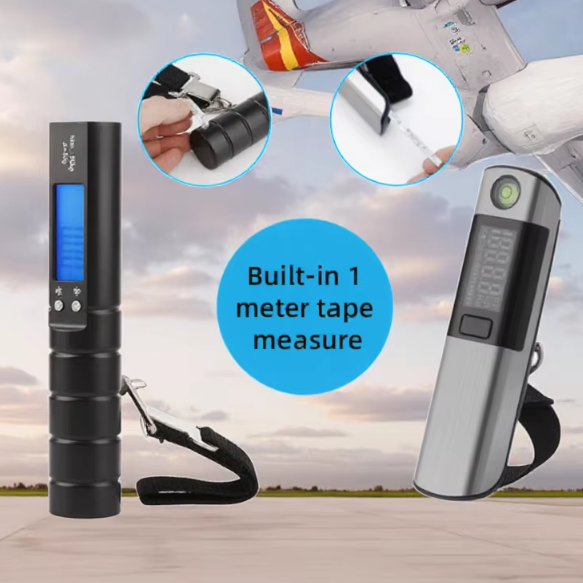
In the world of travel, few things can dampen the excitement of a journey quite like unexpected airport baggage fees. The stress of wondering if your luggage is overweight, the scramble to repack at the airport counter, and the financial hit of paying for excess weight can all take a toll on your travel experience. But with a vast array of options on the market, from basic analog models to high - tech digital devices, which one is truly the best at keeping those pesky fees at bay?
Luggage Scales: Which One Will Save You from Airport Baggage Fees?

In this article, we will explore the rules and regulations surrounding bringing a luggage scale on a plane. We will also provide tips on how to use a luggage scale effectively to avoid any added baggage fees.
Can I Bring a Luggage Scale on a Plane?

Choosing the best travel luggage scale for travel depends on your individual needs and preferences. Whether you prioritize accuracy, portability, durability, or additional features, there is a scale out there that's right for you.
What is the best baggage scale for travel?

In the bustling world of travel, a suitcase scale has become an essential tool for frequent flyers, vacationers, and business travelers in the United States. It helps ensure that your luggage stays within airline weight limits, avoiding hefty overweight fees and the hassle of rearranging your belongings at the airport.
How Can I Test if My Suitcase Scale is Providing Accurate Readings? Are there Any Simple Methods to Verify its Precision at Home?